One centre for a country of islands
Picture a nurse in Davao who has decided, after months of evening classes, that she is ready for the TCF Canada. She opens the list of centres on the website of France Éducation international (FEI), the French public body that runs the test, chooses Philippines, and finds one name.
It is not in Mindanao. It is not in Manila either. It is in Cebu City.
That is the fact this guide is built around, and most advice about the TCF ignores it. The usual advice is written for candidates in Toronto, Paris or Delhi, where a centre is a bus ride away and a second attempt is a matter of booking another Saturday.
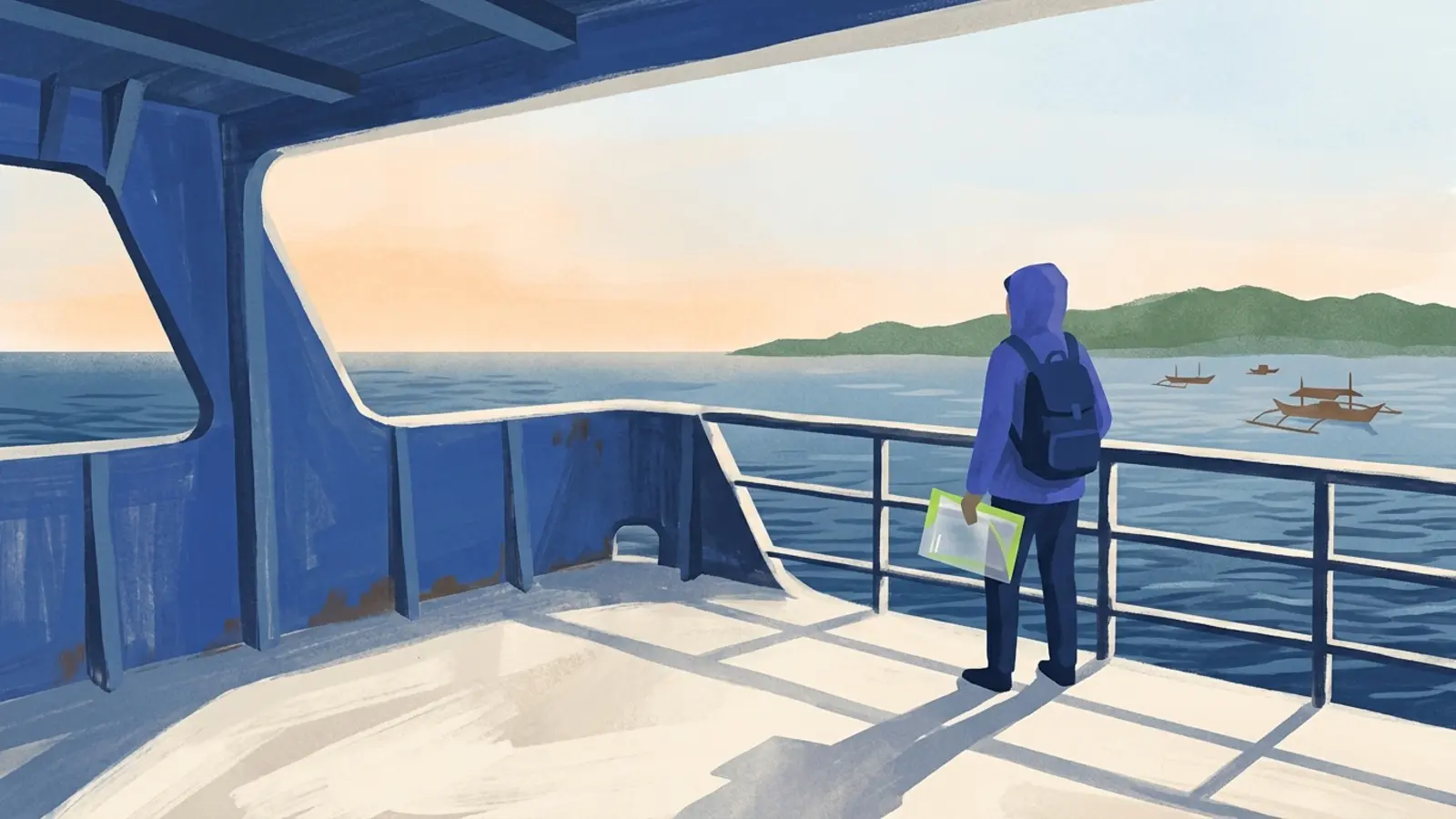
In the Philippines, for anyone outside Cebu, the test begins with a ticket: a flight or a ferry, a bed for the night, a day or two away from work.
The French is the exam. The trip is the part nobody prepares you for.
So read the rest as the argument it is. I think a Filipino candidate should:
- prepare for one well-planned attempt rather than a series of tries;
- treat the logistics as seriously as the grammar;
- spend the weeks of waiting on the one section that a journey makes most costly to fail.
Where to sit the TCF Canada in the Philippines
On the day this guide was checked, FEI’s list of TCF centres for the Philippines held one entry: the Alliance française de Cebu, in Cebu City, which FEI marks as offering sessions on computer.
FEI does not set the dates or run the sessions itself. Its TCF Canada page says that approved centres organise sessions throughout the year as their means allow, and that it is up to you to contact the approved centre nearest your home.
- Cebu City · Alliance française de Cebu, the only TCF centre on FEI’s list; sessions on computer available
- Manila · no TCF centre on FEI’s list
- Davao · no TCF centre on FEI’s list
Two things follow.
The list is the authority
First, the list is the authority, not your assumption. Manila has an Alliance française of its own, and plenty of candidates take for granted that it runs the test; FEI’s TCF list, when we checked it, did not name it.
Lists change
Second, lists change. A centre can be added; the computer option can come or go. Open FEI’s list yourself the week you plan to book, not the month you start studying.
Why French, when your English is already strong
Most Filipino candidates for Express Entry already have an English result they can be proud of. That is exactly why French is worth the trouble, and I think the point is under-sold.
IRCC, Canada’s immigration department, gives additional points in the Comprehensive Ranking System for French:
- NCLC 7 or higher in all four French skills and CLB 4 or lower in English (or no English test)
- 25 points
- NCLC 7 or higher in French and CLB 5 or higher in all four English skills
- 50 points
The bigger reward is reserved for people who are good in both languages.
Strong English does not make French redundant; it doubles what French is worth.
More than one line
Then there are the draws. IRCC runs category-based rounds of invitations, and one of its categories is French-language proficiency, open to candidates with at least NCLC 7 in all four abilities. Another is healthcare and social services occupations.
A nurse with NCLC 7 in French is not choosing between them; she is in more than one line.
All four, not the average
Notice the words that keep returning: all four. IRCC reads the weakest of your four results, not the average. On the TCF Canada, NCLC 7 means at least:
- speaking
- 10/20
- writing
- 10/20
- listening
- 458/699
- reading
- 453/699
A brilliant reading score cannot rescue a 9 in speaking. For someone who has to cross the sea to sit the test, that arithmetic should decide what you practise.
The trip is part of the exam
The TCF Canada lasts 2 hours 47 minutes in all:
- listening, 39 questions
- 35 min
- reading, 39 questions
- 60 min
- writing, three exercises
- 60 min
- speaking, three exercises, 2 of them for preparation, face to face with an examiner
- 12 min
That is a long morning even for someone who slept in their own bed. It is a harder one after an overnight crossing or a dawn flight.
Budget for the journey
My advice is blunt: arrive the day before.
Treat the journey as the first section of the test, budget for it as you would for the fee, and do not let a cheap early flight decide your score in listening, the paper FEI itself says needs your full concentration.
Speaking is always face to face
Sitting on computer does not spare you the human part. FEI says that every test of the TCF is available on computer except speaking, which is always face to face with an examiner.
Whatever the format, you will speak to a person in Cebu.
What to ask the centre before you book
FEI leaves dates, registration, format and price to the centre, and they change, so we print none of them.
What we can give you is the list of questions, and the reason each one matters more when the centre is a journey away.
| Ask | Why it matters if you travel |
|---|---|
| Do you hold TCF Canada sessions, and on which dates? | The TCF has several versions; make sure it is the Canada one, then plan travel around the date. |
| How and by when do I register? | A deadline you miss means another month, and another booking. |
| Is the session on paper or on computer? | FEI marks Cebu as offering computer sessions; ask which yours will be. |
| Where exactly is it held, and at what time do I need to arrive? | So you can book a bed nearby rather than a dawn crossing. |
| Is speaking on the same day as the other tests? | One day or two decides how many nights you stay. |
| What identity document must I bring? | Being turned away at the door after a flight is the costliest mistake there is. |
| What does it cost, and what is the cancellation policy? | Weather can cancel a ferry; know what happens to your booking if it does. |
Before you book: one marking, one trip
Two rules decide how many attempts you should plan for, and both push in the same direction.
The 20-day wait
The first is the wait. FEI lets you sit the TCF Canada as many times as you like, but you must wait 20 days between two sittings of this version of the test.
In a city with a centre, that is an annoyance. Here, it means a second journey, at least three weeks later, and another stretch of time off.
No re-marking until autumn 2027
The second is marking. From the sessions of 1 September 2026, FEI has suspended re-marking of the speaking and writing tests, to improve its tools and smooth the handling of requests; it plans to resume the service in autumn 2027.
Until then, the mark you receive for speaking and writing is the mark you keep. There is no appeal to soften a result that came back one point short. Our guide to the suspension of re-marking explains what that means in detail.
Put together, I think the common advice to “just book it and see how you do” is wrong for Filipino candidates. A practice run on the real test costs a journey and, if you miss, a second one.
Sit when your own practice says you are at the level, not before.
Results, and their two years
Timing matters at the other end too. Results come within 15 working days of FEI receiving the session’s material, in your TCF-Candidat account and sent to the centre, so the clock starts when FEI receives it, not on the day you sit.
Your certificate is valid for 2 years from the date the results are issued, and IRCC asks that results be less than 2 years old both when you complete your Express Entry profile and when you apply for permanent residence. Sit too early, and a slow application can outlive your result.
- 1Set your targetFor the French points and the French draws: NCLC 7 in all four skills.
- 2Check FEI’s listThe week you plan to book, not months before.
- 3Ask the centreDates, registration, paper or computer, place, documents, price.
- 4Plan the tripArrive the day before; keep the evening after free.
- 5Sit the test2 hours 47 in all; speaking face to face with an examiner.
- 6Wait for resultsWithin 15 working days of FEI receiving the session’s material, in your TCF-Candidat account.
- 7Use them in timeValid 2 years from issue; under 2 years old for your profile and your application.
Preparing while you wait
Between booking and sitting there are usually weeks. Spend them on the section that would bring you back on a second trip, and for most candidates that is speaking.
Listening and reading can be practised alone and scored at the end. Writing can be corrected afterwards. Speaking needs someone across the table, and outside Cebu the nearest French-speaking examiner may be an island away.
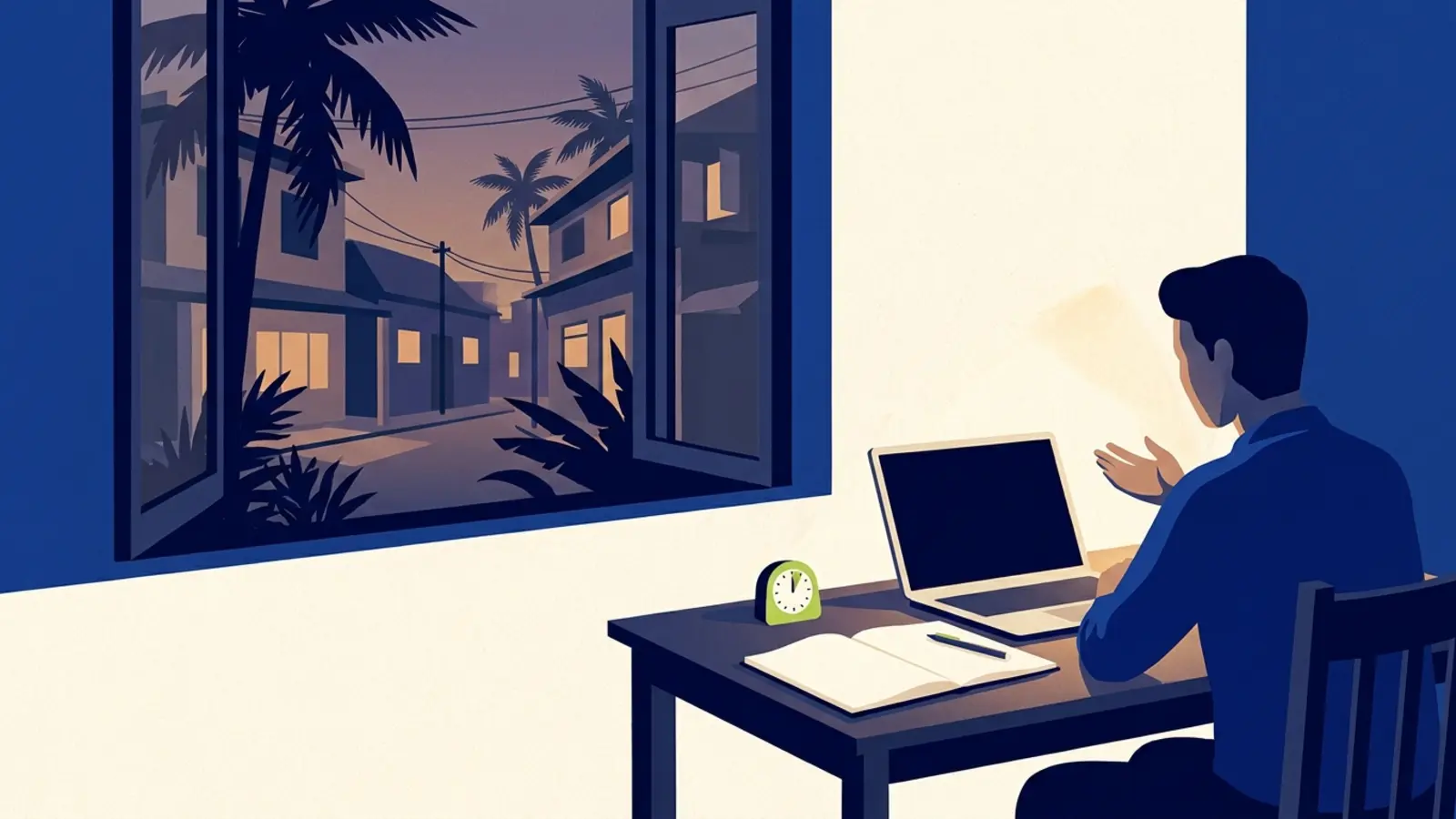
That is where practising online genuinely helps, wherever you live. Salut Canada lets you practise all four sections under exam conditions:
- the speaking test aloud with an examiner at the exam’s timings;
- the three writing tasks within their word limits;
- listening and reading as papers scored on the exam’s scale.
Its study plan reads your results and your exam date. If you would rather work with a person, its live classes with teachers run by video call, in a group or one-to-one, in three programmes: A1, A2 and Exam prep.
But a practice mark that keeps coming back at 10 or above in speaking is a better reason to book a flight to Cebu than hope.
Sources
- France Éducation international (FEI), Centres d’examen, TCF, Philippines: the Alliance française de Cebu, with sessions on computer available.
- FEI, TCF Canada: the four tests and their timings, sessions organised by approved centres, the 20-day wait, results within 15 working days, 2 years’ validity, the suspension of re-marking, reporting a problem on the day, computer sessions except speaking, and advice on concentration in listening.
- Immigration, Refugees and Citizenship Canada (IRCC), Express Entry, language test results: approved French tests, the TCF Canada scores for each NCLC level, and results less than 2 years old.
- IRCC, Comprehensive Ranking System criteria: additional points for French language skills.
- IRCC, Express Entry, category-based selection: the French-language proficiency category and its NCLC 7 requirement.
- Campus France Philippines, Learning the lingo: the Alliance française de Manille.
- Natural Earth, 1:50m admin 0 countries (public domain): the map’s outline.
- Checked on 25 October 2026.