The day is the exam
Picture the morning of your test. You have done the work: the verb tables, the sample questions, a few phone calls about an advertisement rehearsed into your phone and played back with a wince.
- Listening starts, 40 questions in 40 minutes, and it does not stop for you.
- An hour of reading.
- An hour of writing, Section A and Section B, each on its own clock.
- And somewhere in the same session, 15 minutes with an examiner you have never met.
The CCI Paris Île-de-France, which runs the TEF Canada, asks an immigration candidate to sit all four tests in one session. Most candidates have practised every part of it. Far fewer have ever sat it.
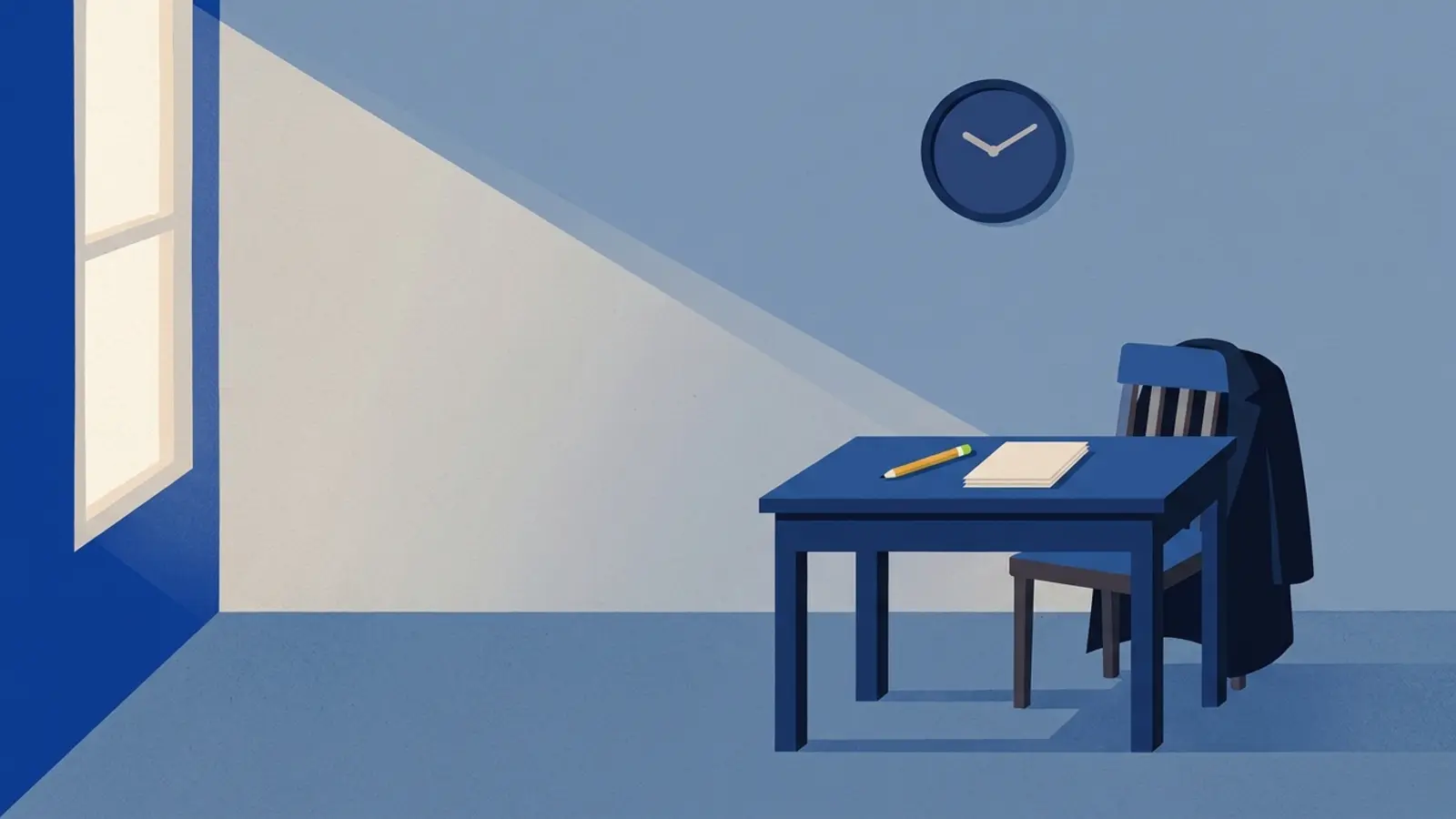
I think that is the most common mistake in TEF preparation, and the least discussed: people train the French and never rehearse the day. Knowing an answer in your armchair and producing it against a clock, tired, with a stranger listening, are different skills. Only the second one is marked.
Why testing yourself beats rereading
This is not a hunch. In 2013 a team of psychologists led by John Dunlosky reviewed ten common study techniques for the journal Psychological Science in the Public Interest.
Why the bad habits survive
An older experiment explains why. In 2006 Henry Roediger and Jeffrey Karpicke had students either reread prose passages or take recall tests on them.
Five minutes later, the rereaders did better. Two days and a week later, the students who had been tested remembered substantially more, even though rereading had left the other group feeling more confident. That is the trap in one sentence:
Rereading feels like learning. Testing is what sticks.
Then there is the pressure itself
In 2016, in Science, Amy Smith, Victoria Floerke and Ayanna Thomas taught 120 students words and pictures, then put some of them through a standard laboratory stress test.
- No loss of memory under stress
- Remembered less, most of all when stressed
It was one study, on word lists rather than a language exam, and its authors said so. But it points where every candidate hopes it will: what you have practised pulling out of your head holds up better when your heart is racing.
The clock is the hard part
Look at where the time goes. The test people fear most, speaking, is the shortest.
The long stretch is reading and writing: two hours between them, where what gives out first is usually attention, not French. A single practice question never rehearses that. A full test on its clock does.
- Listening · 40 min40 multiple-choice questions
- Reading · 60 min40 multiple-choice questions
- Writing · 60 minSection A in 25 minutes, Section B in 35
- Speaking · 15 minSection A in 5 minutes, Section B in 10, with an examiner
In Salut Canada each test is a timed test of its own, on the exam’s clock, so you can sit one on a lunch break or all four in a morning. My advice is to do both, in that order.
What a mock is like, test by test
Listening
Listening is the test that forgives least: conversations, announcements, voicemail messages, street interviews, radio columns and reports, some answers given as four drawings. Salut Canada’s listening test keeps a test’s pace: a few seconds to read each question, a few to answer, the next question when its time is up, and no going back. An interview plays twice; every other recording plays once.
So sit it as the day. Listen, answer, move on. Replaying at will belongs to practice; the mock is for finding out what you catch as the recording plays.
Reading
Reading is a test of pacing. The documents grow longer and harder as the test goes on, from everyday notices to press articles, so the candidate who lingers over question 12 pays for it at question 36.
Writing
Salut Canada’s writing test gives Section A and Section B one hour between them, in an editor with no spell-check, no autocorrect and no automatic capitals: every accent is yours.
Section B asks the most: a letter to a newspaper, at least 200 words and three arguments, in 35 minutes. Our guide to the writing sections says what each one asks.
| Test | Format and clock |
|---|---|
| Listening | 40 questions · 40 min |
| Reading | 40 questions · 60 min |
| Writing | Section A and Section B · 60 min |
| Speaking | Section A and Section B · 15 min |
Speaking to someone who answers
Speaking is where rehearsing alone breaks down. You can read alone; you cannot hold a conversation alone. On the day it is the one test sat with an examiner, who answers, holds back and argues.
Salut Canada’s examiner speaks to you live and answers what you say, through both sections at the exam’s timings:
- 5 minutes on the phone to the advertiser of Section A, asking for information, « vous » throughout,
- then 10 minutes in Section B convincing a friend, « tu », who objects.
It will not sound like the stranger you meet on the day, and I do not think it should try. What it trains is the thing that fails people: ten minutes of keeping an argument going in French while someone keeps disagreeing.
Our guide to the examiner goes further.
Trust the errors more than the number
The two halves of a mock deserve different trust.
Listening and reading: a wrong answer is wrong, and the result gives your right answers out of 40, the NCLC they reach and that level’s band of scores out of 699. What stays an estimate is the series: it is Salut Canada’s own, not the organiser’s, and no practice series is the one you will sit.
Writing and speaking are judged, and here the judge is ours. I would read its list of errors before its number. The errors are concrete and they repeat:
- the same agreement missed,
- the same tense dodged,
- the argument that ran out of things to say.
The number is a level we estimate, not the one the organiser’s assessors will give.
Why the day’s mark is the one that counts
On the day, your writing and your speaking are each assessed by two independent assessors, and the CCI Paris Île-de-France does not assess a result again on request. The mark you get on the day is the mark you keep.
And IRCC sets its minimum for all four abilities at once:
- Jobs in TEER 0 or 1
- NCLC 7
- Jobs in TEER 2 or 3
- NCLC 5
So a strong reading score will not rescue a weak speaking one. A mock is the cheapest place to find the weak one.
How I would use the mocks
Not every night. A mock is a measurement, and measuring every day mostly measures your mood.
- 1Sit one of each test earlyAs a baseline, even if it hurts.
- 2Turn what it finds into practiceThe errors in your writing become drills, and the study plan follows your results.
- 3Sit againOnce that practice has had time to work, not the day after.
In the last weeks
Sit all four in one morning:
- a quiet room,
- the phone in another one,
- no pausing a recording,
- both writing sections back to back.
The aim is simple. When the real 2 hours 55 minutes begin, nothing about them should be new except the questions.
Sources
Le français des affaires (CCI Paris Île-de-France), TEF Canada page and TEF Canada results; IRCC, Express Entry language requirements; J. Dunlosky and others, Improving students’ learning with effective learning techniques, Psychological Science in the Public Interest, 2013; H. L. Roediger and J. D. Karpicke, Test-enhanced learning, Psychological Science, 2006; A. M. Smith, V. A. Floerke and A. K. Thomas, Retrieval practice protects memory against acute stress, Science, 2016. Checked on 26 November 2026.