The test nobody rehearses
Ask a candidate how their preparation is going and you will usually hear a number. A listening score from last night’s series. A reading score that finally moved.
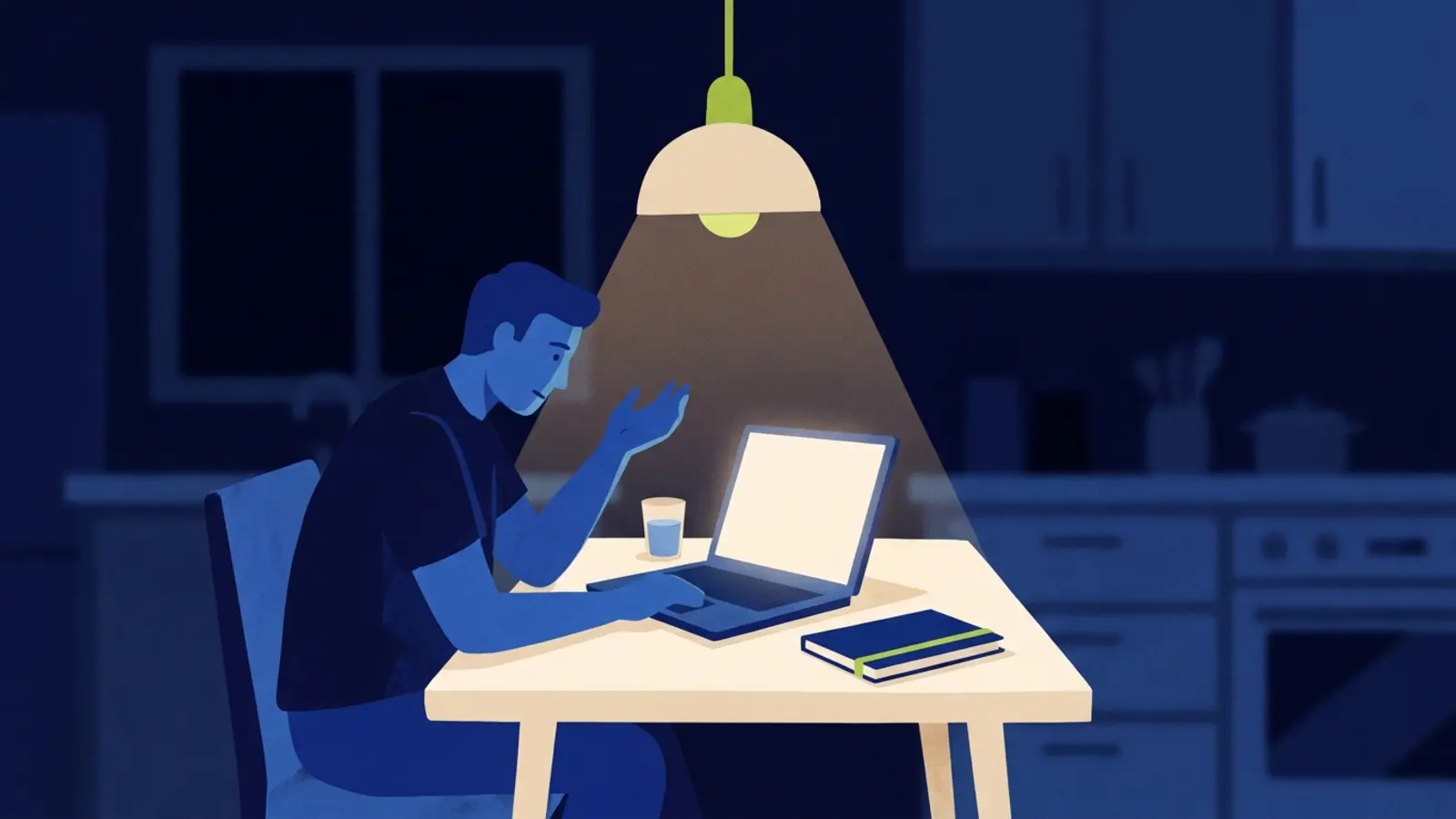
Ask about speaking and the answer turns vague: “I’m working on it.” What that usually means is that they have read model answers, watched other people talk on video, and not themselves spoken French, aloud, to someone waiting for an answer, in weeks.
I do not think this is laziness. It is logistics. Listening and reading can be practised alone at midnight with a score at the end. Writing can be practised alone and corrected later. Speaking needs a listener, and listeners are the scarcest resource in exam preparation.
- A teacher costs money and keeps office hours.
- A French-speaking friend is too kind to correct you, or too busy after the third evening.
- The wall gives nothing back.
So people rehearse in their heads, and silent rehearsal is the most flattering mirror there is. In your head the sentence arrives whole. Aloud, you stop at the third word to find the gender of a noun, and the silence that follows feels like a minute.
- the whole test
- 15 min
- minutes: Section A, then Section B
- 5 + 10
- sections, face to face with an examiner
- 2
The test itself is short, 15 minutes face to face with an examiner, recorded, and with no time to prepare beyond reading the advertisement. My view is simple:
Most candidates who come up short in speaking did not lack French. They lacked hours spent producing it under pressure.
The partner problem
The usual advice is to record yourself. It is good advice, as far as it goes: you hear every hesitation, and it costs nothing.
But nobody asks you anything, and nobody disagrees. You end up training a monologue, and the TEF’s speaking test has none:
- In Section A you phone about an advertisement and have to get information out of someone who answers only what you ask.
- In Section B you present an advertisement to a friend who is not convinced, and you have to win them round.
A recording cannot surprise you, and surprise is exactly what unsettles people in the room.
A good teacher remains the best feedback money can buy, and nothing in this guide argues otherwise. The trouble is volume. Speaking improves with repetitions, and few candidates can afford to book enough of them.
The examiner is software, not a person, and no replacement for one. It is a way to get the dull, necessary repetitions done, so that the hours with a person are spent on what only a person can give you.
What it is actually like
Salut Canada’s examiner is a voice. You speak into your microphone, it listens and answers aloud, in French, in real time, and the conversation appears on the screen as you go. It plays the other side of each section:
- Section A: it plays the person who placed the advertisement, answers your call in « vous », and answers briefly, leaving the asking to you.
- Section B: it plays your friend, in « tu », listens to you present the advertisement, and does not agree straight away.
Practice mode
In practice mode the pressure is off. You choose the section and the subject, and you can ask for help mid-conversation:
- a suggestion of what you might say, which you can listen to;
- or feedback and a corrected version of the answer you just gave.
A suggestion puts good French in your mouth. Help like this is useful early, and dangerous later, and I will come back to why.
The test
The test is where the honesty starts. No help, both sections in one sitting, at the exam’s timings, and a clock that does not wait for you to find a word.
To my mind that clock is the most valuable thing in the product. Ten minutes sounds short until you have to keep an unconvinced friend talking with your arguments for all of it.
- 1Set it upChoose how you take turns: press to speak, or let the examiner hear when you stop. Pick the subjects for Section A and Section B, or press Random.
- 2A short demoA few unmarked lines to learn the controls, so the first real minute is not spent on buttons.
- 3Section A · 1 minute to read, then 5 minutesYou read the advertisement, then phone: you ask, the examiner answers in role.
- 4Section B · 1 minute to read, then 10 minutesYou present the advertisement to your friend and argue; the examiner objects.
- 5The evaluationYour feedback, section by section.
What comes back
What comes back afterwards is where the work really is. Each section is marked on the organiser’s criteria, the section’s own task first, then syntax, vocabulary and fluency, and you see the level and the NCLC it reads as. More usefully, you get:
- your conversation back line by line, each error marked with its correction and a short explanation;
- a corrected and a richer version of each line;
- your own recordings to replay;
- and a note on what to fix first.
Each correction also joins your list of speaking errors, which is where the patterns show: the same agreement missed on Tuesday and again on Friday.
Don’t trust the number
Here is the part an advertisement would leave out, and I think it is the most important paragraph on this page. The examiner is not the TEF’s examiner, and its mark is not your result. It is an estimate.
Treat it as a weather forecast, not a verdict.
How the TEF marks you
On exam day your speaking is marked twice:
- The examiner in the room leads both sections, gives a first evaluation and records them.
- A second examiner at the CCI Paris Île-de-France marks the recording.
The organiser looks at how well you do each section’s job, and at the range and control of your spoken French: vocabulary, correct sentences, pronunciation. No single automatic listener reproduces two trained examiners.
What the examiner misses
- It can mishear a word through a cheap microphone and correct something you never said.
- It does not see you.
- Its subjects are written for practice, not lifted from the exam.
- And on the day, you do not choose your advertisements; in a practice test you may choose your own, which is why I would always press Random.
| Question | Can the examiner tell you? |
|---|---|
| Can I keep arguing for 10 minutes? | Yes. The clock is real. |
| Do I ask real questions in Section A, in « vous »? | Yes. It answers only what you ask, and the register counts. |
| Which errors do I keep making? | Yes. Every correction is kept, so repeats show. |
| What result will the TEF give me? | No. Only the organiser’s examiners decide your result. |
| Will a human examiner react the same way? | No. People are less predictable; practise with one too. |
So what is the mark for? Direction. If it climbs over a month of honest practice tests, something is working. If one criterion stays stuck while the others move, that is your next fortnight. That is all a practice mark can do, and it is plenty.
Getting this right matters, because the day does not come back.
There is no safety net after the day, and the only place left to catch your mistakes is practice.
The script trap
Forums are full of ready-made question lists for Section A and argument templates for Section B, and I understand the appeal: a script feels like control. The TEF is built against it, and the organiser treats giving back a text learned by heart as fraud.
In Section A the examiner’s answers are often vague, and you are expected to ask for details. In Section B, as the organiser puts it, the friend will never agree with you.
Put that aside, though, and the script still fails on its own terms. Recitation sounds recited. The rhythm flattens, the answer drifts from the advertisement in front of you, and the first objection breaks it.
What to prepare instead
This is where help in practice turns dangerous. A suggestion is a good model of how to ask or how to argue. Study it, then close it. If you find yourself repeating its sentences in the next session, you have started writing a script.
- The vocabulary of everyday offers: prices, hours, conditions, booking
- The connectors that carry an argument (d’abord, en revanche, c’est pourquoi)
- The kinds of questions Section A needs
- Ways to answer an objection
- A fixed list of questions for Section A
- A template for Section B
- The suggestions’ sentences
Then speak, fresh, every time.
How I would use it
If I were preparing for this test, I would use the examiner the way a runner uses a stopwatch: constantly, and without taking it too seriously.
- Speak at full voice, somewhere you are not embarrassed to be heard.
- Use a microphone that hears you clearly.
- Learn each section in practice with the help switched on, then switch it off sooner than feels comfortable.
Read the feedback the same day and take one or two errors from it, not ten. Say the corrected lines aloud until they come without effort, then do the same subject again.
A correction you have read is information; a correction you have said ten times is a habit, and only habits survive nerves.
And keep talking to people. The examiner keeps the clock and the record. A person in front of you is the only rehearsal for having a person in front of you.
Try it free
Try the examiner free.
Sources
- Le français des affaires (CCI Paris Île-de-France), Tutoriel de préparation à l’épreuve d’expression orale: the two sections, their timings, the recorded test, what is assessed.
- Le français des affaires, TEF Canada results: speaking marked by the examiner and a second examiner from the recording; no further assessment of a result.
- Le français des affaires and PrepMyFuture, TEF Canada speaking simulation (video): vague answers in Section A, to be followed up.
- Le français des affaires, preparing for the TEF speaking test: an interlocutor who will never agree with you.
- Le français des affaires, Conditions d’inscription et de passation: a text learned by heart treated as fraud.