Throw away the hours column
Picture a candidate six weeks from her sitting. Her study log is a thing of beauty: an hour every evening, two on Sundays, a stack of filled notebooks. Then she sits a full listening test under the clock and lands exactly where she was a month ago. Nothing in the log warned her, because the log measured effort, not French.
I think the hours column does more harm than good. It rewards sitting down, not getting better, and it lets a comfortable routine pass for progress: rereading the grammar you already know, replaying the recordings you already understand.
Effort matters, of course. It is just not what the exam marks.
The TEF Canada does not ask how long you studied. It gives four results, one per test, and IRCC turns each into a level of the Niveaux de compétence linguistique canadiens, the NCLC.
Those levels are counted test by test: Express Entry’s Federal Skilled Worker Program asks for at least NCLC 7 in all four abilities of your first official language. A brilliant reading score does not rescue a weak speaking one.
Your weakest test is your level.
So I would keep three measures and nothing else:
- Your level in each test, on the exam’s own scale.
- How regularly you practise.
- Which errors keep coming back.
The rest of this guide is about reading them honestly.
Two kinds of test, one scale
Most of the confusion I see about progress comes from treating the TEF as one test. It is two kinds of test sharing one scale.
- multiple-choice questions in listening, and 40 in reading
- 40
- the scale of every result, in all four tests
- 0–699
- independent assessors for writing, and for speaking
- 2
Listening and reading: one point a right answer
Listening and reading are 40 multiple-choice questions each. The organiser’s rule is blunt: a right answer is worth one point, and a wrong answer or a blank scores zero.
That total is then converted into a calibrated score out of 699 that takes the difficulty of the questions into account. That has two consequences people underrate:
- You cannot read your score straight off your count of right answers, because the conversion weighs how hard the questions were.
- A blank is never safer than a guess: leave nothing empty.
Writing and speaking: marked by people
Writing and speaking are assessed by people, on standardised grids. Your writing is assessed by two independent, trained assessors; your speaking by the examiner who leads the test and by a second examiner, from the recording. Both results are converted into a calibrated score out of 699 too.
One scale for all four makes it tempting to compare them. As we will see, the same score is not the same level from one test to the next.
The NCLC chart is your scoreboard
Your attestation also gives a CEFR level beside each score. For Canada, I would ignore it.
IRCC converts each result with its own table, and that table, not the CEFR, decides your application. It is the one page worth pinning above your desk.
| NCLC | Listening (out of 699) | Reading (out of 699) | Writing (out of 699) | Speaking (out of 699) |
|---|---|---|---|---|
| 10 and above | 546–699 | 546–699 | 558–699 | 556–699 |
| 9 | 503–545 | 503–545 | 512–557 | 518–555 |
| 8 | 462–502 | 462–502 | 472–511 | 494–517 |
| 7 | 434–461 | 434–461 | 428–471 | 456–493 |
| 6 | 393–433 | 393–433 | 379–427 | 422–455 |
| 5 | 352–392 | 352–392 | 330–378 | 387–421 |
| 4 | 306–351 | 306–351 | 268–329 | 328–386 |
Look at it long enough and three things jump out, each of which should change how you keep score.
1. One scale, four sets of thresholds
A 430 is NCLC 7 in writing and NCLC 6 in listening, reading and speaking. The forums are full of a single “score for NCLC 7”; there is no such number. Read each test in its own column.
2. The bands are wildly uneven
- NCLC 4 in writing, from 268 to 329
- 62 points
- NCLC 8 in speaking, from 494 to 517
- 24 points
Forty points of real progress can leave you on the same level for weeks. If you only watch the level, you will conclude you are stuck when you are not.
3. NCLC 7 is a narrow band
In listening and reading, NCLC 7 runs from 434 to 461: 28 points, the narrowest band in those two columns.
A level you have only just reached is a level you can lose on the day.
This is where I believe most of the progress that changes an application is hiding, and where counting your errors pays most.
Watch the score, not the level
The common advice is to take a mock every week and watch your level. I agree with the first half.
The level is too coarse a ruler to watch on its own, and a mock only measures if it is taken the same way every time.
Keep practice and tests apart
- Is for learning.
- Pause, replay, look things up, try again.
- Is a full series, or a whole writing or speaking test.
- Timed, without help.
A ten-question set with the audio paused twice and a full series under the clock are different measurements; put them on one line and it will flatter you one week and frighten you the next.
Track the tests, and let practice be as messy as learning needs to be.
- Week 1360 pointsNCLC 5
- Week 2371 pointsNCLC 5
- Week 3398 pointsNCLC 6
- Week 4394 pointsNCLC 6
- Week 5424 pointsNCLC 6
- Week 6438 pointsNCLC 7
Read this candidate the way you should read yourself.
- Weeks 3 to 5: the level sits still while the score climbs 26 points. Watching the level alone, she would have changed a plan that was working.
- Week 4 dips, and a single dip means a hard recording or a bad night, nothing more. It takes three or four results going the same way to make a trend.
- Week 6: her NCLC 7 is four points over the threshold of 434. That is a result to repeat, not to book on.
Missed days, not short days
If I could give a candidate one number to watch besides the score, it would be the days practised this week. Not hours: days.
This is one of the most solid findings in learning research. Study spread over several sessions is remembered better than the same amount crammed into one; a large review by Nicholas Cepeda and colleagues in 2006 found the spacing effect across hundreds of experiments in verbal memory.
Twenty minutes on most days beats a heroic Sunday.
And it survives the weeks when work, children or paperwork eat the evenings.
Which tests fill those days
Five days of listening and no speaking at all is regular, and still lopsided, and it is the test you avoid that sets your level.
A blank week shows on a calendar long before it shows in a score.
Count your errors by name
A 410 in writing tells you that you are 18 points from NCLC 7. It does not tell you which points. Your errors do, if you count them by kind rather than by instance.
Twelve corrections on an essay feel like twelve problems. Often they are three, each made four times:
- The agreement of a past participle.
- The preposition after a verb.
- The past tenses of a news story.
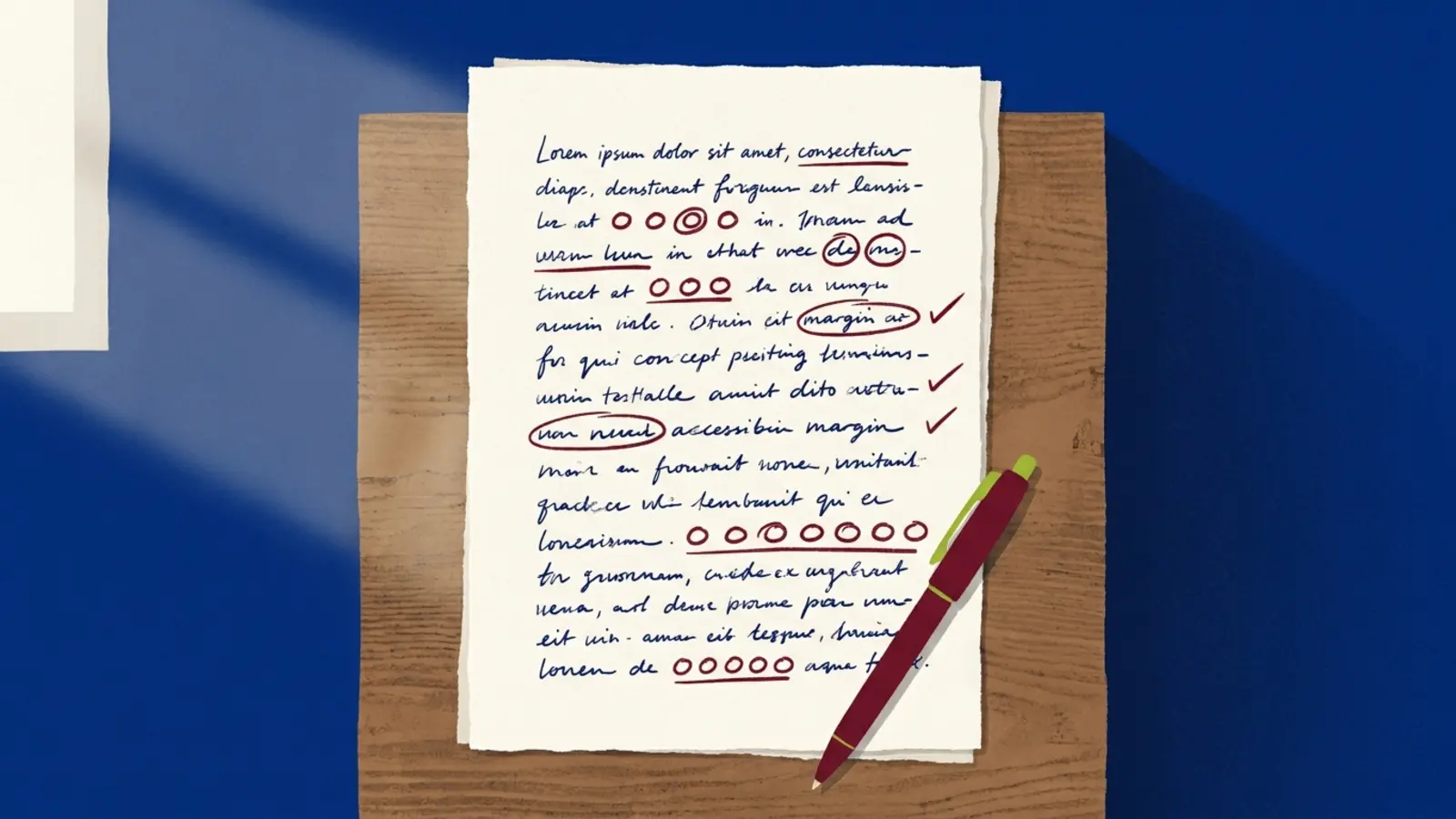
The kind you make three times in a fortnight is your next lesson. The one you made once is noise, and chasing noise is how a candidate stays busy without moving.
Listening and reading work the same way, with the questions you got wrong. A candidate who keeps missing a speaker’s intention has a different problem from one who misses figures and dates, and needs a different week.
Our guide to keeping an error notebook shows how to turn each recurring error into practice.
Fifteen minutes, once a week
Put the three measures together once a week, on the same day. The format matters much less than the habit; this is the one I would use.
- 1Take one testOne test under exam conditions, timed and without help. Change the test each week, so each is measured at least once a month.
- 2Write down the score and the levelThe score out of 699, or the level, and the NCLC the table gives it, beside your last result in the same test.
- 3Count the daysHow many days you practised, and which tests you left untouched.
- 4Name your top three errorsThe three kinds that came back most often, from your corrections and your wrong answers.
- 5Set next weekOne test to take, three errors to drill, the days you will practise. Then stop.
How Salut Canada shows your progress
Salut Canada keeps these three measures for you, from the work you do in it.
- A listening or reading series shows your right answers out of 40 and the NCLC level they reach, with that level’s band of scores out of 699.
- Speaking and writing are marked on the organiser’s criteria, with a CEFR level and the NCLC it reads as.
The Performance page
It draws each test’s level over time.
Beside it sit the test’s top errors.
The home page
A calendar puts a dot on each day you practised, one per test, and your goal card sets your target level beside your recent results in each test.
The closest figure
The Performance page projects your trend.
A full series under the clock gives the closest figure.
Sources
- Le français des affaires (CCI Paris Île-de-France), TEF Canada page.
- Le français des affaires, TEF Canada results.
- IRCC, Express Entry: language test results, TEF Canada table for tests since 11 December 2023.
- N. J. Cepeda, H. Pashler, E. Vul, J. T. Wixted and D. Rohrer, “Distributed practice in verbal recall tasks: a review and quantitative synthesis”, Psychological Bulletin, 2006.
Checked on 26 November 2026.