Throw away the hours column
Picture a candidate six weeks from her sitting. Her study log is a thing of beauty: an hour every evening, two on Sundays, a stack of filled notebooks. Then she sits a full listening test under the clock and lands exactly where she was a month ago. Nothing in the log warned her, because the log measured effort, not French.
I think the hours column does more harm than good. It rewards sitting down, not getting better, and it lets a comfortable routine pass for progress: rereading the grammar you already know, replaying the recordings you already understand.
Effort matters, of course. It is just not what the exam marks.

The TCF Canada does not ask how long you studied. It gives four results, one per section, and IRCC turns each into a level of the Niveaux de compétence linguistique canadiens, the NCLC.
Those levels are counted section by section: Express Entry’s Federal Skilled Worker Program asks for at least NCLC 7 in all four abilities of your first official language. A brilliant reading score does not rescue a weak speaking one.
Your weakest section is your level.
So I would keep three measures and nothing else:
- Your level in each section, on the exam’s own scale.
- How regularly you practise.
- Which errors keep coming back.
The rest of this guide is about reading them honestly.
Two scales, one exam
Most of the confusion I see about progress comes from treating the TCF as one test. It is two kinds of test sharing a day.
- multiple-choice questions in listening, and 39 in reading
- 39
- the scale of a listening or reading score
- 100–699
- the mark in writing, and in speaking
- out of 20
Listening and reading: marked by machine
Listening and reading are 39 multiple-choice questions each, marked by machine. FEI’s rule is blunt: only right answers count, and a wrong answer or a blank scores zero.
A scale then weighs each right answer by the difficulty of its question and turns the total into a score from 100 to 699. That has two consequences people underrate:
- You cannot work out your score by counting your right answers, because a hard question is worth more than an easy one.
- A blank is never safer than a guess: leave nothing empty.
Writing and speaking: marked by people
Writing and speaking are marked by people, each out of 20. Your speaking is marked by the examiner in the room and again, independently and blind, by a second marker trained by FEI; your writing is marked twice, blind, by FEI’s markers, with a third marking where two differ widely.
Out of 20 is a short ruler. On it, as we will see, a single point can be a whole level.
The NCLC chart is your scoreboard
Your attestation also prints a CEFR level for each section, from “A1 not reached” to C2. For Canada, I would ignore it.
IRCC converts each result with its own table, and that table, not the CEFR, decides your application. It is the one page worth pinning above your desk.
| NCLC | Listening (out of 699) | Reading (out of 699) | Writing (out of 20) | Speaking (out of 20) |
|---|---|---|---|---|
| 10 and above | 549–699 | 549–699 | 16–20 | 16–20 |
| 9 | 523–548 | 524–548 | 14–15 | 14–15 |
| 8 | 503–522 | 499–523 | 12–13 | 12–13 |
| 7 | 458–502 | 453–498 | 10–11 | 10–11 |
| 6 | 398–457 | 406–452 | 7–9 | 7–9 |
| 5 | 369–397 | 375–405 | 6 | 6 |
| 4 | 331–368 | 342–374 | 4–5 | 4–5 |
Look at it long enough and three things jump out, each of which should change how you keep score.
1. Listening and reading do not share thresholds
A 455 is NCLC 7 in reading and NCLC 6 in listening. The forums are full of a single “score for CLB 7”; there is no such number. Read each section in its own column.
2. The bands are wildly uneven
- NCLC 6 in listening, from 398 to 457
- 60 points
- NCLC 8 in listening
- 20 points
Thirty points of real progress can leave you on the same level for weeks. If you only watch the level, you will conclude you are stuck when you are not.
3. One point out of 20 is a whole level
In writing and speaking, a 9 is NCLC 6 and a 10 is NCLC 7.
One point out of 20 is the difference between two levels.
This is where I believe most of the progress that changes an application is hiding, and where counting your errors pays most.
Watch the score, not the level
The common advice is to take a mock every week and watch your level. I agree with the first half.
The level is too coarse a ruler to watch on its own, and a mock only measures if it is taken the same way every time.
Keep practice and tests apart
- Is for learning.
- Pause, replay, look things up, try again.
- Is a full series or a full task.
- Timed, without help.
A ten-question set with the audio paused twice and a full series under the clock are different measurements; put them on one line and it will flatter you one week and frighten you the next.
Track the tests, and let practice be as messy as learning needs to be.
- Week 1381 pointsNCLC 5
- Week 2392 pointsNCLC 5
- Week 3405 pointsNCLC 6
- Week 4401 pointsNCLC 6
- Week 5431 pointsNCLC 6
- Week 6462 pointsNCLC 7
Read this candidate the way you should read yourself.
- Weeks 3 to 5: the level sits still while the score climbs 26 points. Watching the level alone, she would have changed a plan that was working.
- Week 4 dips, and a single dip means a hard recording or a bad night, nothing more. It takes three or four results going the same way to make a trend.
- Week 6: her NCLC 7 is four points over the threshold of 458. That is a result to repeat, not to book on.
Missed days, not short days
If I could give a candidate one number to watch besides the score, it would be the days practised this week. Not hours: days.
This is one of the most solid findings in learning research. Study spread over several sessions is remembered better than the same amount crammed into one; a large review by Nicholas Cepeda and colleagues in 2006 found the spacing effect across hundreds of experiments in verbal memory.
Twenty minutes on most days beats a heroic Sunday.
And it survives the weeks when work, children or paperwork eat the evenings.
Which sections fill those days
Five days of listening and no speaking at all is regular, and still lopsided, and it is the section you avoid that sets your level.
A blank week shows on a calendar long before it shows in a score.
Count your errors by name
A 9 out of 20 in writing tells you that you are one point from NCLC 7. It does not tell you which point. Your errors do, if you count them by kind rather than by instance.
Twelve corrections on an essay feel like twelve problems. Often they are three, each made four times:
- The agreement of a past participle.
- The preposition after a verb.
- The register of a formal letter.
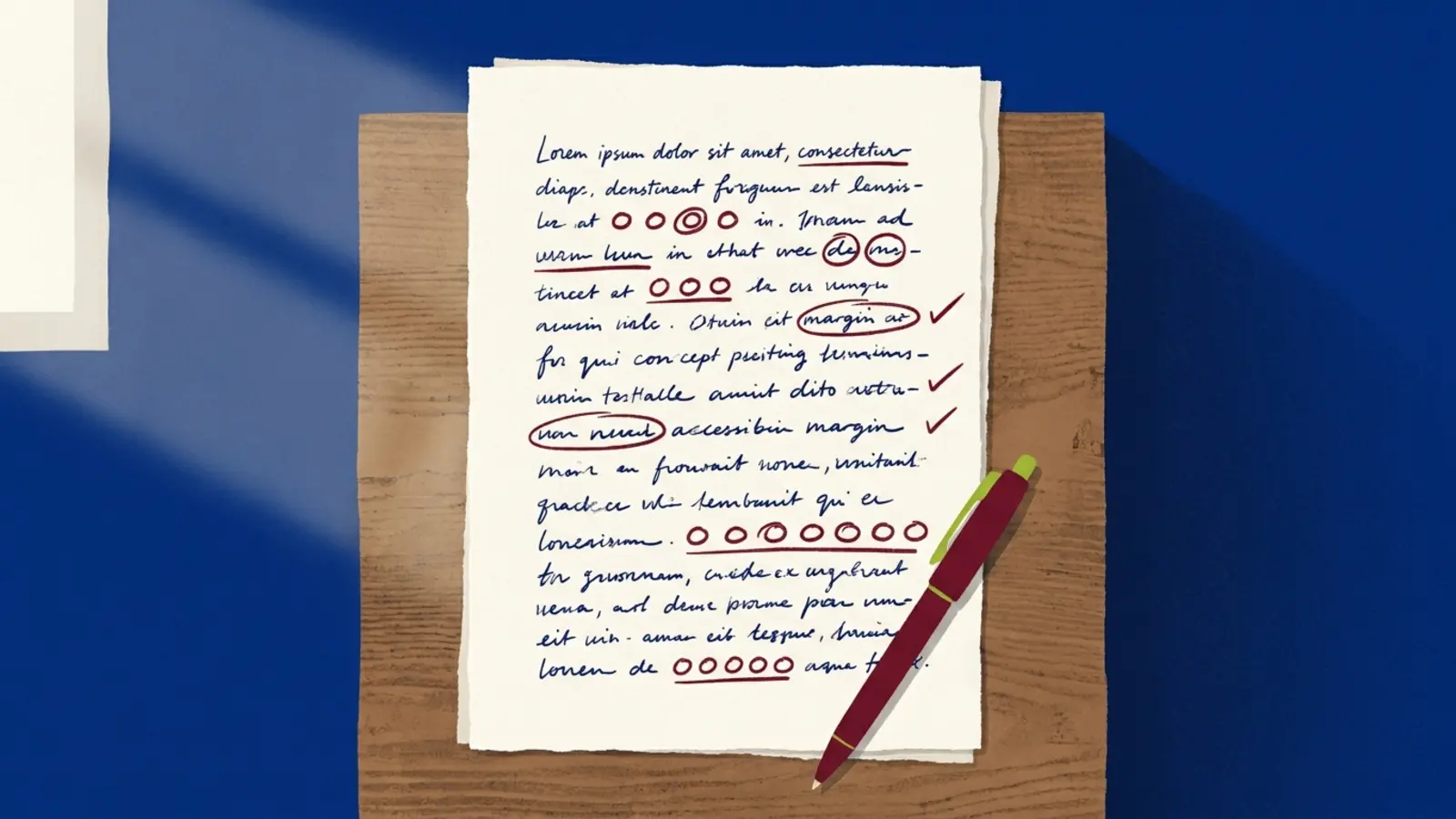
The kind you make three times in a fortnight is your next lesson. The one you made once is noise, and chasing noise is how a candidate stays busy without moving.
Listening and reading work the same way, with the questions you got wrong. A candidate who keeps missing a speaker’s intention has a different problem from one who misses figures and dates, and needs a different week.
Our guide to keeping an error notebook shows how to turn each recurring error into practice.
Fifteen minutes, once a week
Put the three measures together once a week, on the same day. The format matters much less than the habit; this is the one I would use.
- 1Take one testOne section under exam conditions, timed and without help. Change the section each week, so each is measured at least once a month.
- 2Write down the score and the levelThe score out of 699 or the mark out of 20, and the NCLC level the table gives it, beside your last result in the same section.
- 3Count the daysHow many days you practised, and which sections you left untouched.
- 4Name your top three errorsThe three kinds that came back most often, from your corrections and your wrong answers.
- 5Set next weekOne section to test, three errors to drill, the days you will practise. Then stop.
How Salut Canada shows your progress
Salut Canada keeps these three measures for you, from the work you do in it.
- Listening and reading series are scored out of 699 and given the NCLC level of the table above.
- Speaking and writing are marked on the exam’s criteria with a CEFR level, and a speaking task and a writing test also get a mark out of 20.
The Performance page
It draws each section’s level over time.
Beside it sit the section’s top errors.
The home page
A calendar puts a dot on each day you practised, one per section, and your goal card sets your target level beside your recent tests in each section.
Distrust every trend line, ours too
The Performance page projects your trend. Treat it as a direction, not a promise.
A full series under the clock gives the closest figure.
Sources
- FEI, TCF Canada page.
- FEI, how the TCF is marked (Évaluation des épreuves du TCF).
- FEI, understanding your TCF results.
- IRCC, Express Entry: language test results (modified 16 October 2026).
- N. J. Cepeda, H. Pashler, E. Vul, J. T. Wixted and D. Rohrer, “Distributed practice in verbal recall tasks: a review and quantitative synthesis”, Psychological Bulletin, 2006.
Checked on 25 October 2026.